











Illogicality vs extreme illogicality
Federal Court. Does a judicial review applicant claiming illogicality in the decision of an administrative decision-maker need to show "extreme illogicality"? Can it be said that "inviting an applicant for a protection visa to speculate on the motivations, reasons or circumstances of a third party in the applicant’s country of nationality may be unlikely to produce probative material"?

Can any risk of harm be unacceptable?
Federal Court. The Minister found for the purpose of s 501CA(4) of the Migration Act 1958 (Cth) that the Applicant's offending conduct was so serious that even a low risk of harm was unacceptable. Was it "permissible for the Minister to approach his fact-finding (or satisfaction forming) on the basis that any risk of serious harm to members of the Australian community was unacceptable"?

Re‑enactment presumption?
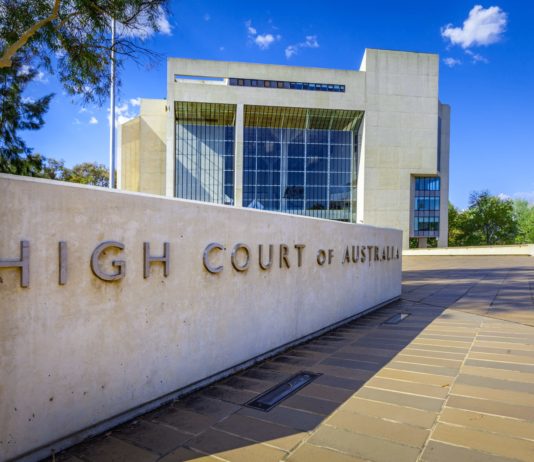
High Court. Where Parliament repeats words which have been judicially interpreted, can it be taken, depending on the circumstances "to have intended the words to bear the meaning already judicially attributed to them"?

Indifference to fraud: a low threshold?
Federal Court. Does the Briginshaw principle favour a conclusion that a person's onus of proving that they were not recklessly indifferent to fraud is low? Is there anything untoward about a client attending the office of a practitioner for the purpose of procuring their services and making an upfront payment? Can it be said that, "whether a person is or is not indifferent to another’s fraud is to be assessed subjectively, although the objective facts may permit an inference to be drawn about a person’s state of mind"?

Citizenship Act: s 34(2) interpreted on appeal
Federal Court (Full Court). In an "appeal" under s 44(1) of the AAT Act, does a misinterpretation of the law amount to an error only if it is material to the decision in question? If not, is the issue of the materiality of an error nevertheless relevant to whether relief should be refused in the exercise of the Court’s discretion? In exercising the residual discretion under s 34(2) Citizenship Act 2007 (Cth), was the Tribunal limited to considering conduct or matters which had resulted in convictions within the ambit of ss 34(2)(b)(i) to (iv)?

s 426A: AAT required to consider application merits?
Federal Court. If primary and secondary visa applicants have their combined visa applications refused and they make a Tribunal application for the review of the refusals, does that constitute the making of multiple applications, one for each applicant? Is there anything in 426A "or the statutory context in which it appears which requires the Tribunal to have regard to the merits of the substantive application"? If not, does that mean that "in all circumstances no consideration of the merits is warranted"?

Low tolerance of criminal conduct: a factual finding?
Federal Court. In deciding under s 501CA(4) of the Migration Act 1958 (Cth) not to revoke the mandatory cancellation of the Applicant's visa, the Minister found that "Australia has a low tolerance of criminal conduct for people…who have been participating in, and contributing to, the community only for a short period". Should that finding "be understood as a concrete factual finding reflective of some impossible synthesis or amalgamation of the views held collectively by the Australian community"?

s 109: reason for giving incorrect information relevant to discretion?
Federal Court (Full Court). Do ss 100 or 111 of the Migration Act 1958 (Cth) "make the question of whether the appellant’s incorrect answers were deliberate or inadvertent legally irrelevant in the context of" the discretion to cancel a visa under s 109? Are the circumstances prescribed under r 2.41 of the Migration Regulations 1994 (Cth) for the purpose of s 109(1)(c) non-exhaustive? If so, what are the types of permissible considerations?

Harman undertaking: does it apply to documents voluntarily provided?
Federal Court. Is the so-called implied undertaking (also known as “Harman undertaking”) to the effect that "a party who seeks discovery of documents obtains it on condition that the party will make use of those documents only for the purpose of that action, and for no other purpose"? If so, does the answer suggest that the undertaking only applies to documents obtained under compulsion, as opposed to documents voluntarily provided?

Ali, Ibrahim, BCR16 & Direction 75
Federal Court (Full Court). The Full Court discussed in detail whether single judge decisions of the Federal Court (whether in the original or appellate jurisdiction) bind Full Court decisions (whether in the original or appellate jurisdiction) and vice-versa. It also discussed whether Ali, Ibrahim and BCR16 were correctly decided and the effect of Direction 75.